


Overheat = Overcost: What Tri-Cities Drivers Should Know About Their Cooling System Tri-Cities summers are no joke. When temperatures climb into the 100s, your vehicle’s cooling system has to work even harder. Learn what to watch for before a small coolant issue turns into major engine damage.
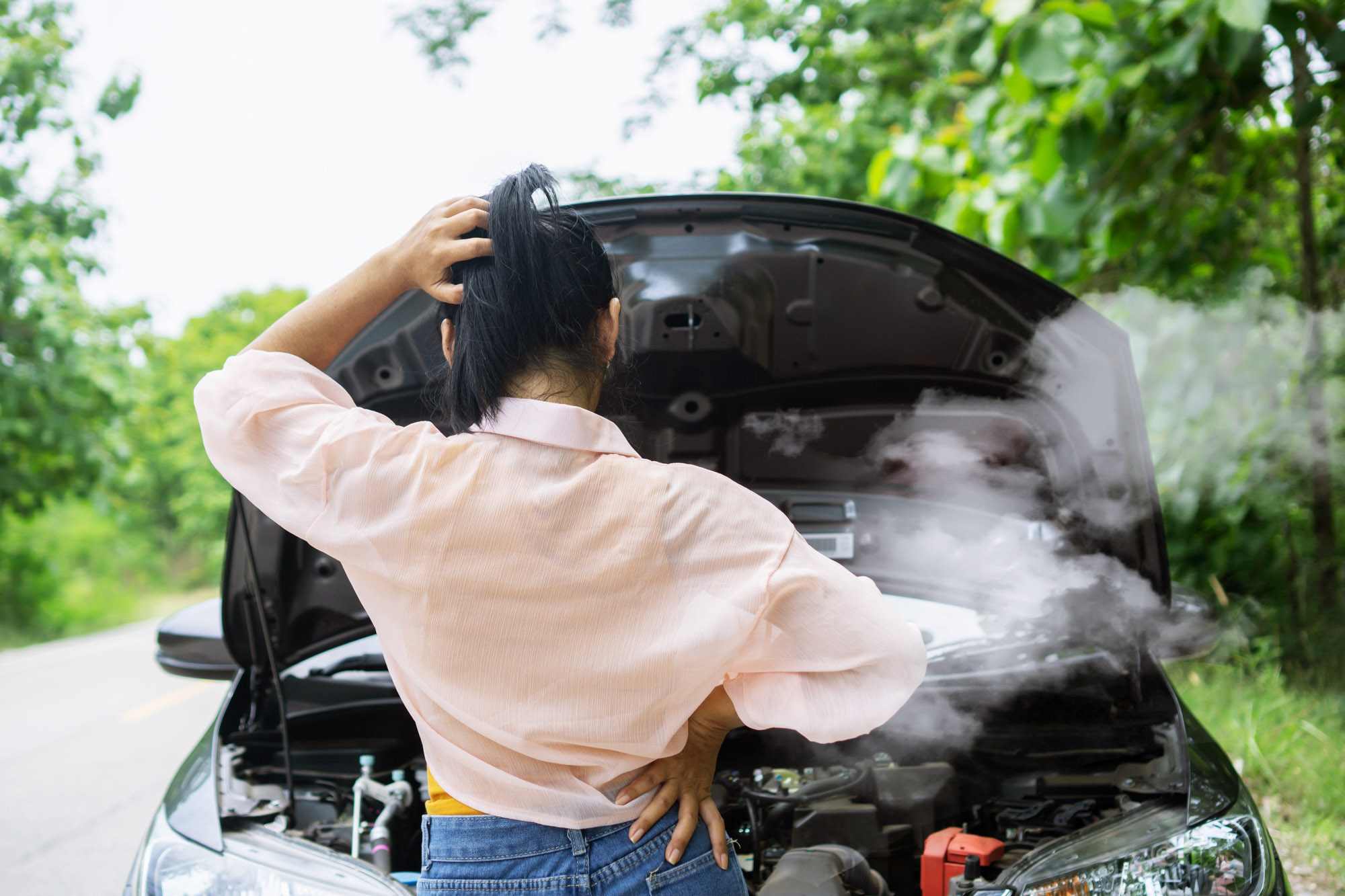
As we approach the blazing 100–110°F weather here in the Tri-Cities, it is important to ask: how will this hot weather affect your vehicle?
Understanding your vehicle’s cooling system can help keep your vehicle operating properly in extreme heat and help you avoid costly repairs. Modern engines produce a massive amount of heat, and when the cooling system fails, the damage can happen fast.
Key Takeaways
- Modern engines create a huge amount of heat, and the cooling system is responsible for keeping that heat under control.
- Coolant condition matters. Color, pH level, and freeze/boiling protection should all be checked.
- Coolant hoses can fail from age, rubbing, oil contamination, and internal breakdown.
- Thermostats can stick open or closed, both of which can cause drivability issues or engine damage.
- Coolant leaks should never be ignored, especially during extreme summer heat.
- If your temperature gauge suddenly maxes out, stop the vehicle and call a tow truck.
Why Your Vehicle’s Cooling System Matters
Today’s engines are efficient, but they still create a surprising amount of heat. In fact, a large percentage of the energy produced from burning fuel is transformed into heat instead of forward motion.
That heat has to be managed properly. Your cooling system does this by circulating coolant through the engine, absorbing heat, and returning that coolant to the radiator to cool back down.
Modern Cooling Systems Are More Complex Than Ever
Cooling systems today may also help regulate the temperature of:
- The engine
- Turbochargers
- Exhaust gas recirculation coolers
- Hybrid batteries
- Liquid intercoolers
- Heater cores
- Transmission coolers on some vehicles
This added complexity means there are more components that must work together to keep the vehicle operating safely.
What Happens When a Vehicle Overheats?
When a cooling system fails, the results can be serious. Modern engines are built with tight tolerances and often use thinner oils, such as 0W-8 and 0W-16.
During an overheating event:
- Engine oil can chemically break down
- Oil viscosity can decrease
- Internal engine parts can expand unevenly
- Metal parts can scrape against each other
- The engine can seize
- Cylinder heads can warp
- Head gasket failure can occur
If your temperature gauge suddenly spikes or maxes out, stop driving immediately. Turn off the engine and call a tow truck. Continuing to drive can turn a cooling system repair into an engine replacement.
4 Common Cooling System Problem Areas
1. Coolant Condition
The heart of your cooling system is the coolant itself. Coolant should be checked regularly for:
- Color
- pH level
- Freeze protection
- Boiling protection
- Proper concentration
Coolant Color
The first thing to check is the coolant’s appearance.
Warning signs include:
- Rusty color
- Muddy appearance
- Contamination
- Debris in the coolant
If coolant looks rusty or muddy, it may have outlived its service life and should be replaced. Poor coolant condition can also increase the chance of damage to radiators, heater cores, gaskets, seals, thermostats, and other cooling system components.
Coolant pH Level
Coolant pH should generally be between 7 and 11.
If the pH is too low, the coolant becomes too acidic. This can cause corrosion inside the cooling system.
Acidic coolant can damage:
- Radiators
- Heater cores
- Gaskets
- Seals
- Metal cooling system components
If the pH is too high, the coolant becomes too alkaline. This can lead to deposits and blockages inside the cooling system, reducing coolant flow and cooling efficiency.
Coolant Freeze and Boiling Protection
Coolant concentration can be tested with a hydrometer or refractometer.
In the Tri-Cities, a common coolant mixture is a 50/50 coolant-to-water ratio, which typically provides freeze protection down to around -34°F.
Contrary to popular belief, too much coolant concentrate is not better. If the concentration is too high, both cooling ability and freeze protection can be reduced.
Recommended Coolant Service Interval
As a general rule, coolant should be replaced every 3 to 5 years. This helps maintain proper corrosion protection, cooling performance, and freeze/boiling protection.
2. Coolant Hoses
Coolant hoses are another common failure point. Modern vehicles can have as many as 14–16 coolant hoses, depending on the design.
These may include:
- Radiator hoses
- Heater hoses
- Overflow bottle hoses
- Turbo coolant hoses
- Crossover hoses
- Liquid intercooler hoses
- Quick-connect coolant hoses
Coolant hoses are commonly made from rubber materials such as EPDM or silicone, and they break down over time.
Common Coolant Hose Failures
Abrasion
Coolant hoses can rub against engine components over time. Eventually, that rubbing can wear through the hose and cause a leak or rupture.
This can happen when hoses are routed too close to:
- Brackets
- Steering components
- Engine accessories
- Belts
- Metal edges
Oil Contamination
Oil leaks can also damage coolant hoses. When oil soaks into the rubber, it can make the hose soft, swollen, and weak.
This increases the chance of the hose bursting.
Oil leaks are not just messy. They can damage nearby rubber components, including coolant hoses, belts, and seals. Fixing an oil leak early can help prevent bigger problems later.
Electrochemical Degradation
Coolant hoses can also break down from the inside. Electrochemical degradation causes small cracks inside the hose, often near the ends where the hose connects with a clamp or fitting.
Over time, the hose can become soft and rupture.
Quick Connectors and Plastic Fittings
Many modern coolant hoses use plastic fittings, tees, and quick connectors. These plastic parts age just like rubber hoses do.
They may fail by:
- Cracking
- Breaking from brittleness
- Corroding
- Not resealing after removal
- Leaking at the connection point
If coolant hoses with quick connectors are older than 10 years or 100,000 miles, replacement is often recommended during related repairs.
3. Thermostat Failure
The thermostat is one of the main control valves in your cooling system. Its job is to regulate coolant flow and help the engine reach and maintain the correct operating temperature.
Most thermostats work through a wax element inside a sealed chamber. As the wax heats up, it expands and opens the thermostat. As it cools, the wax contracts and a spring pushes the thermostat closed.
Why Thermostats Fail
Thermostats commonly fail due to:
- Age
- Weak internal springs
- Corrosion
- Poor coolant condition
- Sludge or deposits
- Breakdown of the wax element
The typical service life of a thermostat is around 10 years or 100,000 miles.
Stuck Open Thermostat
When a thermostat sticks open, coolant circulates constantly instead of being properly regulated.
This can cause:
- Poor heater performance in winter
- Engine taking too long to warm up
- Reduced fuel economy
- Increased internal engine wear
- Check engine lights on some vehicles
Stuck Closed Thermostat
A thermostat stuck closed is more serious. In this condition, coolant cannot circulate properly, and the engine can overheat very quickly.
Possible damage includes:
- Severe overheating
- Internal engine seizure
- Warped cylinder head
- Head gasket failure
- Major engine damage
Electronic Thermostats
Some modern vehicles now use electronic thermostats. These can provide better temperature control, but they also add cost and complexity to the cooling system.
If your temperature gauge is outside the normal range, or your vehicle is showing signs of a thermostat issue, it is best to have it inspected by a qualified repair shop.
4. Coolant Leaks
Coolant leaks are often the most noticeable cooling system issue.
Common coolant leak locations include:
- Radiator
- Water pump
- Heater core
- Thermostat housing
- Coolant reservoir tank
- Head gasket
- Intake gaskets on some vehicles
- Freeze plugs
- Coolant hose connections
- Plastic tees and fittings
Why Coolant Leaks Happen
Coolant leaks are commonly caused by:
- Age
- Worn components
- Poor coolant condition
- Corrosion
- Plastic part failure
- Design flaws
- Lack of maintenance
The best way to prevent avoidable cooling system failures is to maintain the coolant system and replace worn components during major repairs.
Coolant leaks rarely fix themselves. A small leak can quickly become a major overheat issue, especially during Tri-Cities summer heat.
What Should You Do If Your Vehicle Overheats?
Not every vehicle gives a warning before a cooling system failure. If your temperature gauge suddenly rises or maxes out, take it seriously.
If Your Vehicle Starts Overheating
- Pull over safely
- Turn the engine off
- Do not keep driving
- Do not remove the radiator cap while hot
- Call a tow truck
- Have the vehicle inspected before driving again
Driving an overheated vehicle can cause major engine damage in a very short amount of time.
Need Cooling System Help?
If you would like professional assistance evaluating or repairing your vehicle’s cooling system, give us a call.
360 Automotive & Repair
509-572-2769
Is your temperature gauge rising?
Do not keep driving. Pull over, shut the engine off, and call a tow truck. Continuing to drive an overheating vehicle can cause serious engine damage.
Related Reading
Sorry, we couldn't find any posts. Please try a different search.