


5 Things to Know About Your Vehicle’s A/C System Before It Gets Too Hot Before summer starts, make sure your car's air conditioning works.
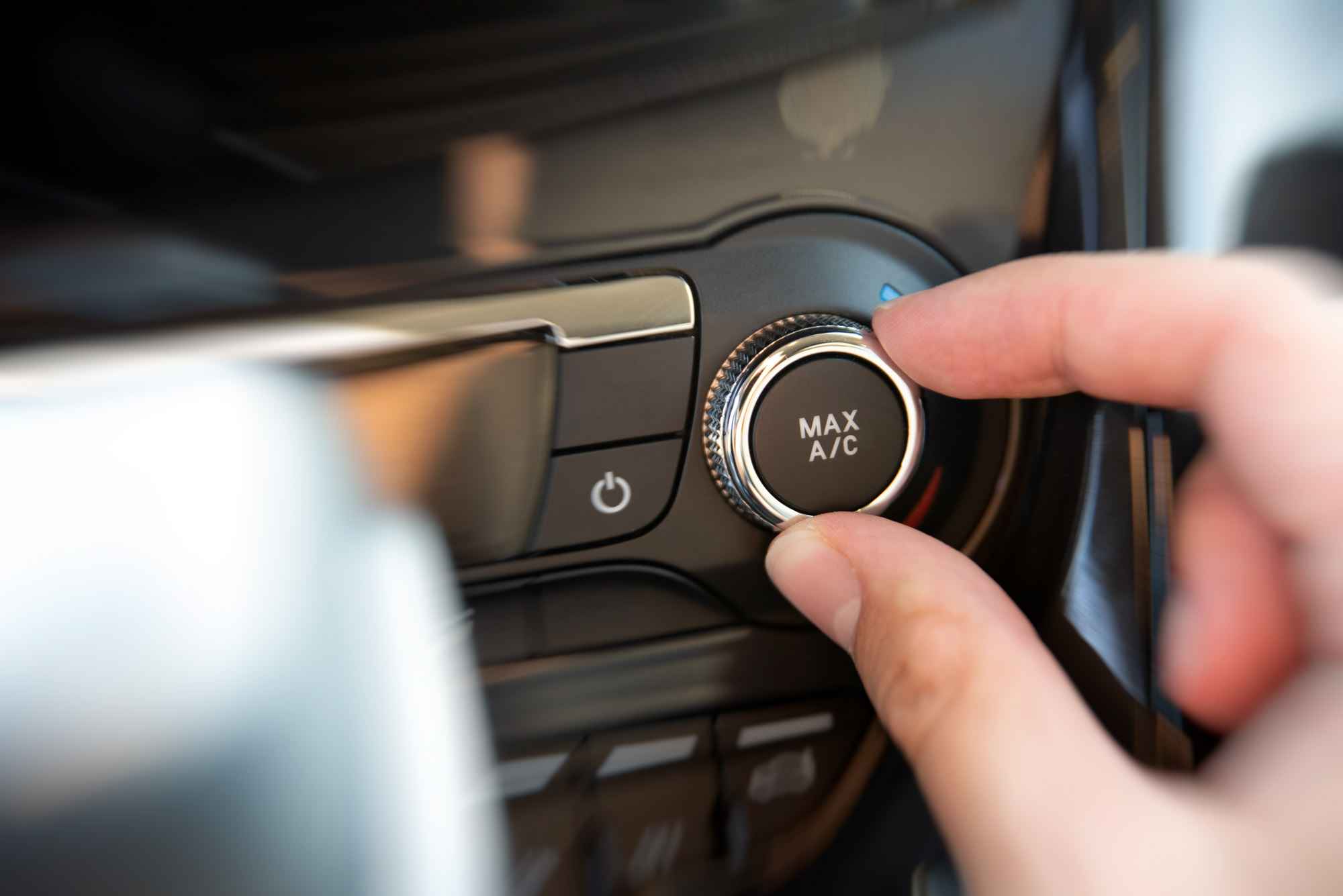
When the weather heats up, your vehicle’s air conditioning system becomes more than just a comfort feature. It helps keep your drive cool, comfortable, and enjoyable. But when your A/C starts blowing warm air, making odd noises, or refusing to switch vents, it can quickly turn into a frustrating problem.
Here are five important things to know about your vehicle’s A/C system before the hot weather hits.
Key Takeaways
- Your A/C works best when it recirculates already-cooled cabin air.
- A healthy A/C system is sealed and depends on proper refrigerant pressure.
- Clicking or clunking noises may point to compressor short cycling.
- Not all A/C problems are refrigerant-related.
- Sometimes the fix is as simple as turning the A/C button on.
1. Your A/C Works Best When Recirculating Cabin Air
Your vehicle’s A/C system cools most efficiently when it can recool air that is already inside the cabin. That is what happens when your recirculation button or recirculation light is turned on.
A standard A/C system can typically cool air around 40 degrees Fahrenheit lower than the outside ambient temperature. That means if your system is pulling in hot outside air, it has to work harder to cool it down.
When recirculation is on, the system uses air that has already been cooled inside the vehicle. This helps:
- Lower cabin temperatures faster
- Reduce strain on the A/C system
- Keep the ride more comfortable
- Improve cooling performance on hot days
If your A/C is not cooling well, checking whether recirculation is turned on is a great first step.
2. Your A/C System Is Designed to Be Sealed
Your vehicle’s A/C system is designed to operate as a sealed unit. It relies on refrigerant moving through the system in a specific cycle to create cold air.
The refrigerant goes through four main phases:
Compression
The compressor takes in cool, low-pressure refrigerant gas and compresses it into a high-pressure gas.
Condensation
The high-pressure gas moves into the condenser, where it changes into a high-pressure liquid.
Expansion
The high-pressure liquid passes through the expansion valve. The restriction causes a pressure drop, turning the refrigerant into a cold, low-pressure vapor/liquid mixture.
Evaporation
The cold refrigerant enters the evaporator core and absorbs heat from inside the vehicle as the blower fan moves air across it. This is what creates the cold air you feel from your vents.
Then the low-pressure refrigerant returns to the compressor, and the process starts again.
Why Leaks Matter
The main takeaway is simple: if your A/C system has a leak, the system cannot perform this process properly.
Low refrigerant can cause:
- Warm air from the vents
- Poor cooling performance
- Compressor issues
- System damage if ignored
If your A/C is blowing hot, a refrigerant leak is one of the first things that should be checked.
3. Clicking or Clunking May Mean the Compressor Is Short Cycling
If you hear a clicking or clunking sound every few seconds to every 45 seconds and your A/C is not blowing cold, your compressor may be short cycling.
Short cycling means the compressor is turning on and off too frequently instead of running normally.
Common causes include:
- Low refrigerant level due to a leak
- Failing pressure sensor
- Restriction inside the A/C system
- Electrical or control issues
Because several issues can cause the same symptom, it is best to have a professional inspect the system. Proper testing helps pinpoint the actual failure instead of guessing.
4. Not Every A/C Problem Is a Refrigerant Problem
Sometimes the refrigerant side of the system is working properly, but the air still does not blow where it should or change temperature correctly.
One common issue we see is failure in the HVAC actuator system.
HVAC actuators control functions like:
- Switching between hot and cold air
- Changing airflow from defrost to dash vents
- Moving air to the floor vents
- Controlling blend doors inside the dash
Actuators commonly fail because of:
- Internal electrical issues
- Broken plastic gears
- Failed blend door movement
- Control module or computer problems
In these cases, your A/C may still be capable of producing cold air, but the air may not reach the correct vents or blend to the right temperature.
5. Make Sure the A/C Button Is Actually Turned On
This one is a little tongue-in-cheek, but it happens more often than you might think.
For your system to blow cold air, the A/C button must be turned on. Every year, we see a handful of vehicles where the only problem is that the A/C button was off.
Thankfully, those are the easy ones. We turn the button on and send the customer on their way.
Before assuming something major is wrong, double-check:
- The A/C button is on
- The fan speed is turned up
- The temperature is set to cold
- Recirculation is on
- The vents are selected correctly
Need Professional A/C Repair?
Your vehicle’s A/C system has several moving parts, electrical controls, pressure sensors, actuators, and sealed refrigerant components. When one part fails, it can affect the entire system.
If your A/C is blowing warm, making noises, switching vents incorrectly, or not cooling like it should, we can help.
Call 360 Automotive & Repair at 509-572-2769 for professional A/C diagnosis and repair.
And if you learned something new, share this with a friend before the hot weather hits.
Is your A/C blowing warm air?
A properly working A/C system should cool efficiently, especially with recirculation turned on. If your vehicle is not staying cool, it may be time for a professional A/C inspection.
Related Reading
Sorry, we couldn't find any posts. Please try a different search.